
Beginner's Guides, Information, Tips & Tricks

How to set-up and deal a Mahjong Game

Please read some tips on how to set-up the mahjong tiles and deal a game including photos and short gif’s.

Step 1: Pick a dealer

The dealer (and the table position) is chosen by various means:

Each player throws a dice (or a pair of die) with the highest count taking the dealer position (East), second-highest taking south, third-highest taking west and last taking north. (A simpler version is that everyone takes a seat at the mahjong table. Everyone rolls a pair of dice and the highest becomes east, and people already sitting at the table get their relevant position.)

Or one player may place one tile of each wind face down and shuffle them. Each player randomly select one of these tiles and these tiles dictate their wind position. Each player sits down at their respective position (called the wind position) at the table in positions of an inverted compass: East is dealer, the right of the dealer is South, across is West, and the left is North.

The order of play is traditionally counter-clockwise.

Step 2: Setting up the wall

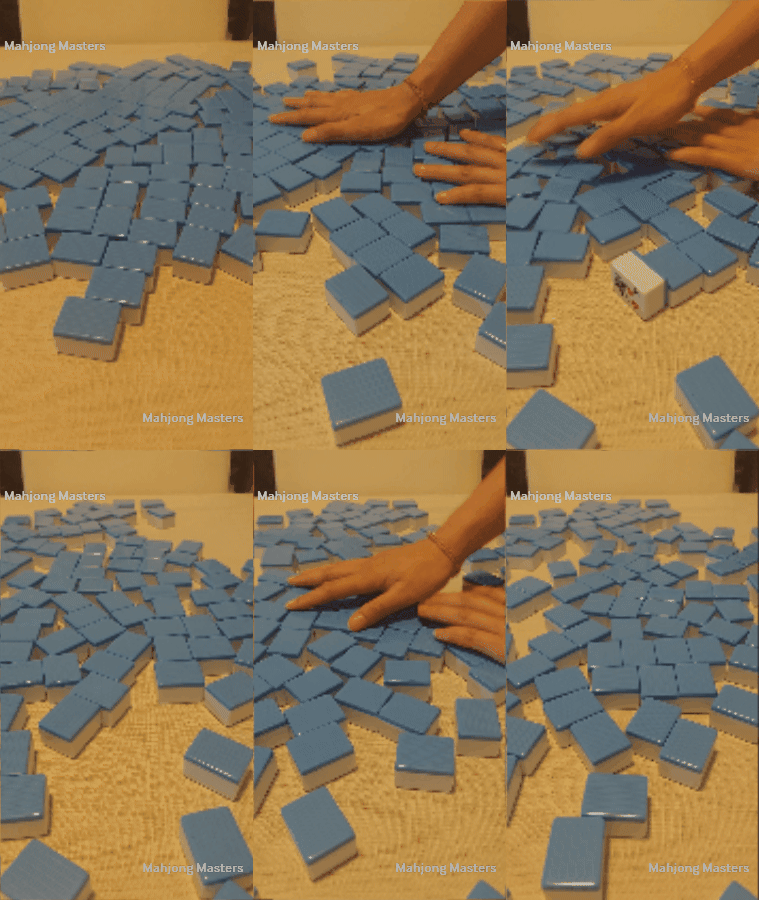
All 136 tiles (144 if playing with flowers and seasons) are mixed up and placed face down on the table. They will be shuffled randomly, like shuffling a deck of cards.
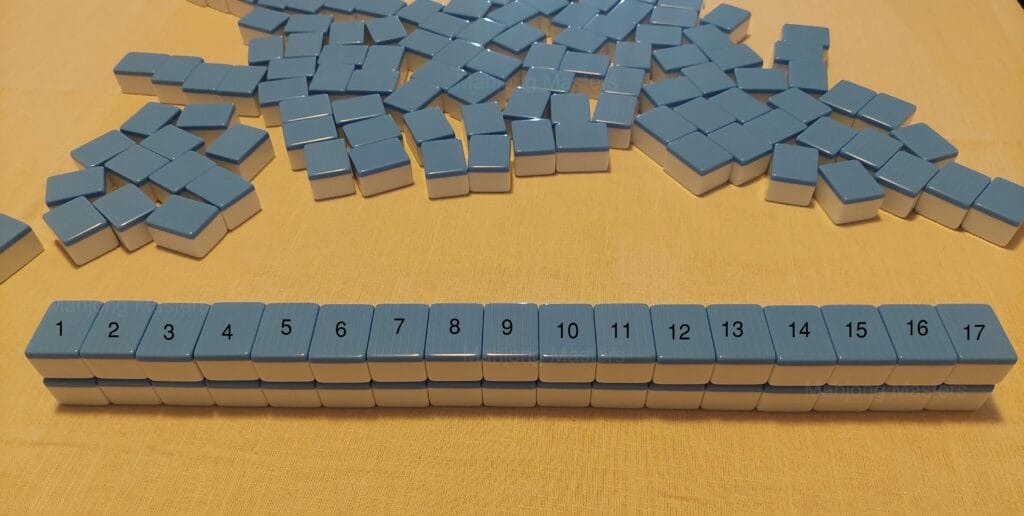
Each players then selects 34 tiles each and arranges it in two tiles high, 17 tiles long. (Note: If you are playing with seasons and flowers, it will be 18 tiles long, therefore a player will take 36 tiles.)
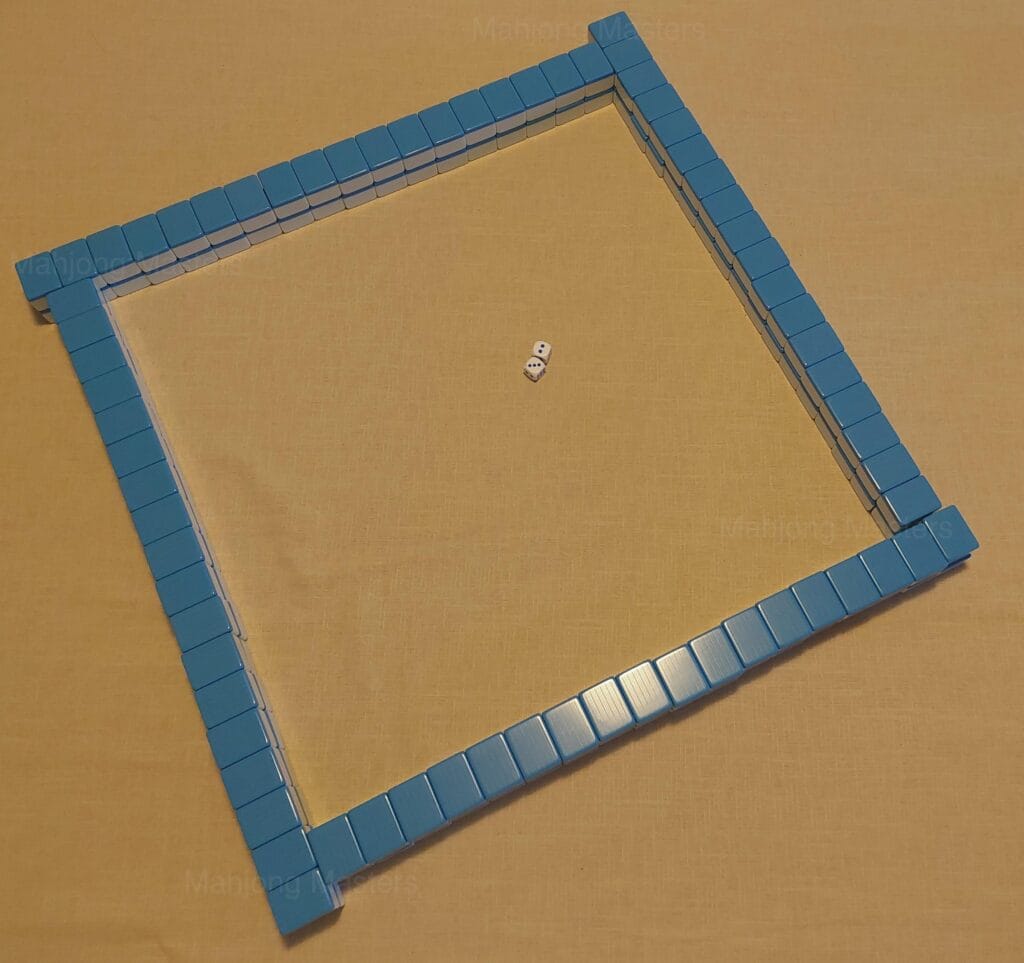
These 4 lines then get joined to make a square called the “wall”.
Step 3: Breaking the wall

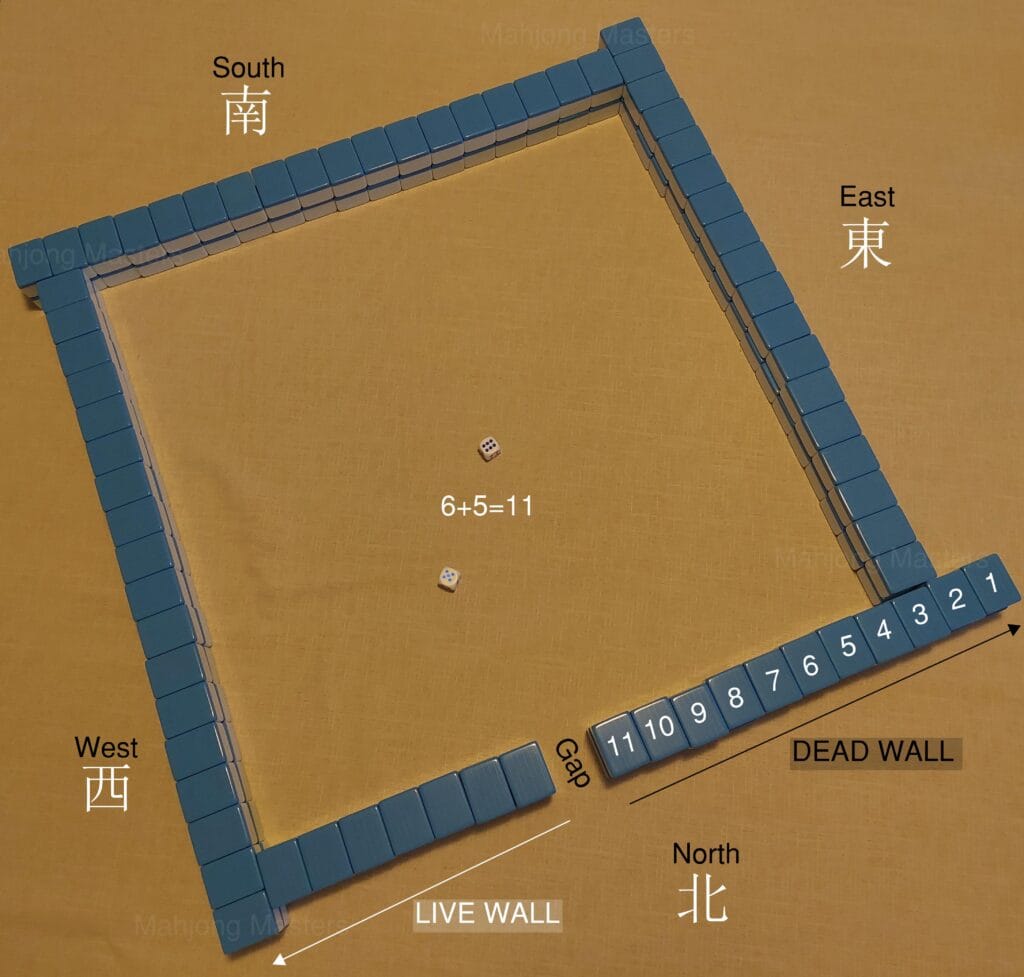
The dealer (sitting in the east position) throws two dice and adds the two together. Count anti-clockwise counting from 1 (East) -> 2 (South) -> 3 (West) -> 4 (North) -> 5 (East) and so forth.
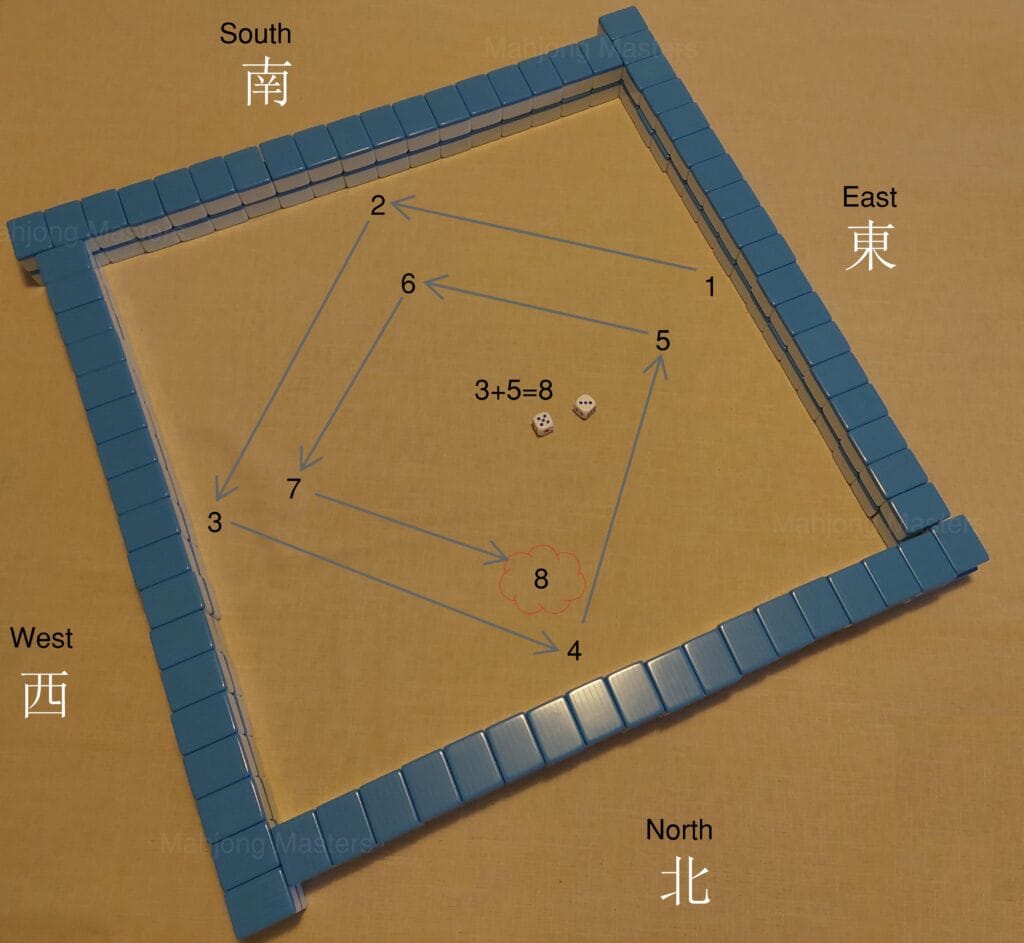
The position that it stops (in this example, North), that player throws the two dice and adds the numbers together (in this example 6+5 = 11). Starting at the right hand end of their part of the wall. They count the thrown total along, and when it comes to the last two tiles, break the wall with a gap at this point by pushing the left hand tiles slightly further to the left to make a gap. This is where the tiles will be drawn from.
Step 4: Dealing the tiles

The person who ‘broke’ the wall then starts dealing. Each player will get 13 tile, besides the ‘East’ player who will have 14, and need to discard a tile in the first play.

The order of the deal will be East (4 tiles), South (4 tiles), West (4 tiles), North (4 tiles), East (4 tiles), South (4 tiles), West (4 tiles), North (4 tiles), East (4 tiles), South (4 tiles), West (4 tiles), North (4 tiles), East (2 tiles), South (1 tile), West (1 tile) and North (1 tile).

There are two ways to deal the final tiles. The ‘jump’ and the ‘double’.

Now that you have dealt the tiles, you are ready to begin the game!

Let’s play mahjong 🀄!

Share this

Previous Post

Mahjong Set Selection Guide: Finding Your Perfect Match

Choosing the right Mahjong set can greatly enhance your gaming experience. Whether you’re a seasoned player or just starting out, the world of Mahjong sets is rich and varied. In this blog post, we’ll provide a comprehensive Mahjong set selection guide, offering tips and advice for selecting the perfect set that aligns with your preferences and skill level.

Material Matters: Wood, Plastic, or Bakelite?

One of the primary considerations when selecting a Mahjong set is the material of the tiles and other components. Each material has its own unique characteristics:

1. Wood: Traditionalists often prefer wooden Mahjong sets for their authenticity and tactile feel. They can be beautifully crafted and add an elegant touch to the game. However, wooden sets are often heavier and more fragile.

2. Plastic: Plastic sets are lightweight, durable, and affordable. They are a practical choice for beginners or those who prefer a more casual play style. They are also less susceptible to damage from spills or mishandling.

3. Bakelite: Bakelite sets strike a balance between authenticity and durability. They are known for their smooth, satisfying feel and distinctive clacking sound. Bakelite is a popular choice among serious players.

Design and Style: Traditional or Modern?

Mahjong sets come in a range of designs, and your choice should reflect your personal taste and style:

1. Traditional: Traditional sets often feature intricate, hand-painted designs that harken back to the game’s Chinese origins. These sets may include symbols and characters with deep cultural significance.

2. Modern: Contemporary sets come in various styles, from minimalist to bold and vibrant. They may include non-traditional designs and patterns, catering to those who prefer a more modern aesthetic.

Size Matters: Full-Size or Travel-Friendly?

Mahjong sets come in different sizes, and your choice may depend on where and how you plan to play:

1. Full-Size: Full-size sets are the standard for home play and formal gatherings. They typically include larger tiles that are easy to handle and appreciate.

2. Travel-Friendly: If you intend to play Mahjong on the go, consider a travel-sized set. These compact sets are lightweight and portable, making them suitable for vacations or outdoor gatherings.

Chinese, Japanese, or Western Style: Know Your Rules

The type of Mahjong you plan to play also influences your choice of set:

1. Chinese Style: If you’re playing traditional Chinese Mahjong, look for sets with suit tiles (circles, bamboos, and characters), honor tiles (winds and dragons), and optional bonus tiles (flowers and seasons).

2. Japanese Style: Japanese Riichi Mahjong uses a specific set of tiles, which includes red five-bamboos and excludes some optional tiles found in Chinese sets. Ensure your set aligns with Japanese rules if that’s your preferred style.

3. Western Style: Western Mahjong, also known as American Mahjong, uses its own unique set of tiles, which includes joker tiles. Make sure your set is compatible with the rules you intend to play.

Budget Considerations

Mahjong sets can vary widely in price. Set a budget that suits your needs and preferences. While there are budget-friendly options, investing in a quality set can enhance your enjoyment and durability.

Selecting the right Mahjong set is a personal journey, influenced by your play style, preferences, and intended use. Whether you’re drawn to the traditional allure of wooden tiles or the modern convenience of a plastic set, there’s a Mahjong set out there that’s perfect for you. Remember that your Mahjong set is not just a tool for play; it’s a symbol of your love for this timeless game, and it should reflect your passion for it.

Let’s play mahjong 🀄!