Our Blog

Welcome to The Mahjong Masters blog! Where we will try to provide information on mahjong. Everything from basics to some tricks that may come in useful!

Mahjong for Team Building: Using the Game to Foster Communication and Collaboration

In the realm of team building activities, Mahjong may not be the first game that comes to mind. However, this ancient Chinese game offers a unique and effective way to promote communication, collaboration, and teamwork among participants. In this blog post, we’ll explore how Mahjong can be used as a powerful tool for team building, bringing individuals together to develop essential skills and strengthen interpersonal relationships.

The Nature of Mahjong

Mahjong is a game of strategy, skill, and social interaction. Players must work together to achieve a common goal while navigating the complexities of the game board. Each player’s success is intertwined with that of their teammates, requiring effective communication and collaboration to achieve victory.

Key Principles of Mahjong Team Building

  1. Communication: Mahjong encourages players to communicate openly and effectively with their teammates. Discussing strategy, sharing information about tile draws, and coordinating moves are essential components of successful gameplay.
  2. Collaboration: Collaboration is at the heart of Mahjong. Players must work together to identify opportunities, plan their moves, and adapt to changing circumstances. By pooling their collective knowledge and resources, teams can overcome challenges and achieve their objectives.
  3. Problem-solving: Mahjong presents players with a series of challenges that require creative problem-solving skills. Teams must analyze the game board, anticipate their opponents’ moves, and devise strategies to achieve victory. This process fosters critical thinking and encourages participants to explore new approaches to problem-solving.
  4. Trust: Trust is an essential element of Mahjong team building. Players must trust their teammates to make sound decisions and support each other throughout the game. By building trust within the team, participants can collaborate more effectively and achieve greater success.

Benefits of Mahjong Team Building

  1. Improved Communication Skills: Mahjong encourages participants to communicate openly and effectively with their teammates, leading to improved communication skills both within the game and in real-life situations.
  2. Enhanced Collaboration: Mahjong fosters collaboration and teamwork, helping participants develop the skills needed to work effectively with others towards a common goal.
  3. Strengthened Relationships: Mahjong provides a fun and engaging way for participants to bond with their teammates, leading to stronger interpersonal relationships and a sense of camaraderie.
  4. Boosted Morale: Engaging in Mahjong team building activities can boost morale and create a positive work environment, leading to increased motivation and productivity among participants.

Mahjong offers a unique and effective way to promote communication, collaboration, and teamwork among participants. By incorporating Mahjong into team building activities, organizations can help their employees develop essential skills, strengthen interpersonal relationships, and foster a culture of collaboration and mutual support. As teams come together to play Mahjong, they not only have fun but also build the foundation for long-term success and growth.

Let’s play mahjong πŸ€„!

Why Mahjong Is Better Than Brain Training Apps

Brain‑training apps promise sharper thinking, better memory, and improved focus. But while they offer quick digital exercises, Mahjong delivers something deeper – genuine cognitive benefits paired with real human connection.

Mahjong isn’t just a game. It’s a mental workout, a social ritual, and a mindfulness practice all in one. And unlike subscription‑based apps, Mahjong strengthens your mind naturally, through play, strategy, and community.

What Mahjong Exercises

Memory

Mahjong constantly challenges your working memory. You track:

  • Which tiles have been discarded

  • What opponents are collecting

  • Your own hand’s evolving shape

This repeated recall strengthens short‑term and long‑term memory in a way that feels effortless because it’s embedded in gameplay.

Pattern Recognition

Mahjong is built on patterns – sequences, sets, suits, and probabilities. Players learn to:

  • Spot tile combinations instantly

  • Predict opponents’ hands

  • Recognise efficient paths to victory

This pattern‑based thinking sharpens cognitive speed and improves problem‑solving skills.

Emotional Regulation

Mahjong teaches calm under pressure.

You learn to:

  • Stay composed when your hand falls apart

  • Make rational decisions instead of emotional ones

  • Manage frustration, excitement, and uncertainty

It’s a subtle form of emotional training that builds resilience and patience.

Social Intelligence

Unlike solo brain apps, Mahjong is played with people – and that changes everything.

You develop:

  • Reading skills (body language, confidence, hesitation)

  • Cooperation and competition balance

  • Table etiquette and communication

These social interactions stimulate parts of the brain that digital puzzles simply can’t reach.

Why Mahjong Works Better Than Screens

Mahjong trains the brain through natural, meaningful engagement:

  • No repetitive drills

  • No ads or subscriptions

  • No screen fatigue

  • No artificial difficulty spikes

Instead, you get:

  • Real conversation

  • Real strategy

  • Real laughter

  • Real connection

It’s cognitive training disguised as a good time.

If you want sharper thinking and stronger relationships, Mahjong delivers both. It keeps your mind active, your emotions balanced, and your social world vibrant β€” all without a single notification or monthly fee.

Mahjong keeps your brain alive the way it was meant to be: through play, people, and presence.

πŸ€„ Ready for your next mental workout? Let’s play Mahjong!

Common Mahjong Superstitions (And Whether They Work)

Mahjong isn’t just tiles and strategy – it’s a game rich with superstition, ritual, and tradition. Across tables worldwide, players bring their own beliefs about luck, energy, and the β€œright” way to invite good fortune. Some swear by them. Others laugh at them. But almost everyone has at least one.

Here are some of the most popular Mahjong superstitions – and a look at whether they actually help your game.

Popular Beliefs

Lucky Seating Positions

Many players believe certain seats bring better luck β€” especially the East seat, which starts the round and often feels more β€œpowerful.” Some tables even have rituals about who sits where, based on birthdays, past wins, or β€œenergy flow.”

Avoiding β€œCursed” Tiles

Every group has tiles that feel unlucky:

  • The one you always discard before winning

  • The dragon that seems to doom your hand

  • The tile that shows up every time you lose

Players may avoid touching them, delay discarding them, or treat them with extra caution

Wearing Lucky Colours

Red for prosperity. Green for growth. Black for protection. Some players choose outfits or accessories they believe boost their luck β€” from bracelets to socks to full Mahjong‑night ensembles.

Table Rituals

These vary wildly:

  • Shuffling tiles in a specific pattern

  • Tapping tiles for luck

  • Starting the game with a shared phrase

  • Never stacking tiles in a certain way

They’re part superstition, part tradition, part bonding.

Do These Superstitions Actually Work?

Psychologically β€” yes.

Superstitions can:

  • Boost confidence

  • Reduce anxiety

  • Create a sense of control

  • Make the game feel more fun and meaningful

When you feel lucky, you often play more decisively β€” and that alone can improve performance.

Strategically β€” maybe not.

Luck rituals won’t change tile distribution or probability. But they can influence:

  • Your mindset

  • Your focus

  • Your willingness to take (or avoid) risks

So while they won’t guarantee wins, they can shape how you approach the game.

Why Superstitions Matter Anyway

Superstitions add:

  • Fun: they make every table feel unique

  • Identity: players express personality through rituals

  • Tradition: they connect modern play to cultural roots

  • Community: shared beliefs strengthen group bonds

Mahjong is more than strategy. It’s culture, connection, and storytelling – and superstitions are part of what makes the game feel alive.

Whether you believe in lucky seats or think it’s all just playful ritual, Mahjong superstitions enrich the experience. They bring charm, personality, and a touch of magic to every game.

And who knows – your lucky colour might just help you win the next round.

πŸ€„ Ready to test your luck at the table? Let’s play mahjong πŸ€„!

The Most Beautiful Mahjong Sets from Around the World

Mahjong sets aren’t just tools for gameplay – they’re works of art. Across the world, Mahjong tile design reflects local culture, values, and aesthetics, turning each set into a visual and cultural statement.

Notable Styles

China
Traditional Chinese Mahjong sets feature bold colors, classic calligraphy, and symbolic imagery. These designs emphasize heritage and tradition, often drawing from centuries-old motifs.

Japan
Japanese Riichi Mahjong tiles are known for their clean lines and minimalist elegance. Simple markings, smooth finishes, and compact sizing reflect Japan’s design philosophy of clarity and precision.

United States
American Mahjong sets often embrace pastel tones, modern fonts, and playful designs. These sets feel fashion-forward and social, mirroring the game’s strong community focus in the U.S.

Southeast Asia
Mahjong sets from Southeast Asia frequently feature decorative engravings, gold accents, and intricate detailing. These sets prioritize visual richness and ceremonial appeal.

Special Collector’s Mahjong Sets

Luxury Brands

Luxury Brands do curate special set’s of Mahjong, for example, HermΓ¨s, Prada and Louis Vuitton to name just a few.

A range of luxury mahjong set cases, from carved wooden boxes to leather travel trunks
Images courtesy of Hermès, Prada and Louis Vuitton.
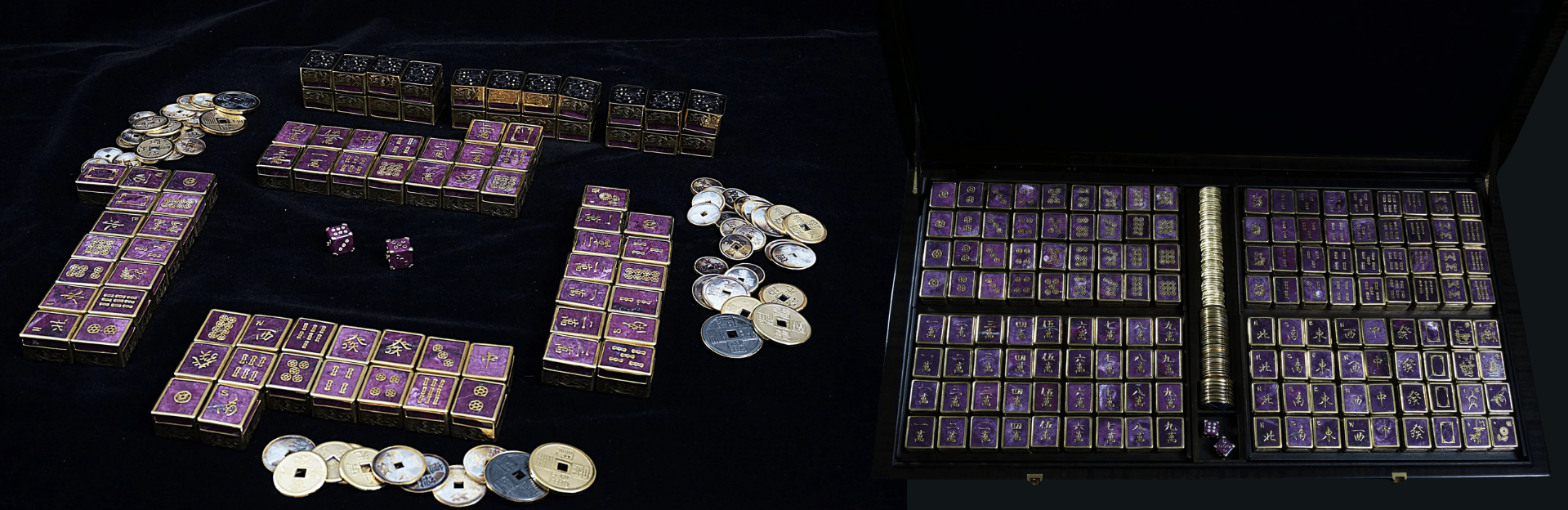
A dark luxury mahjong set laid out with patterned tiles, scoring counters and its fitted case

Images courtesy of https://www.thels.co/laquart/laquart-x-st-dupont-haute-creation-the-worlds-most-luxurious-mahjong-set

Specialty and/or Collector’s

Airlines, Games, Disney (Winnie the Pooh and Princesses), are examples of speciality collector’s edition of Mahjong Tile Sets.

Mahjong as Art and Expression

A Mahjong set can be both a game and a cultural artifact. Whether minimalist or ornate, each set tells a story about where it comes from and how the game is played there.

For many players, choosing a Mahjong set isn’t just about functionalityβ€”it’s about identity, tradition, and personal taste.

Mahjong’s beauty lies not only in its strategy but also in how it blends history, craftsmanship, and creativity into a timeless experience.

Let’s play mahjong πŸ€„!

Examining the Depiction of Mahjong in Traditional and Contemporary Art

Mahjong, with its intricate tiles and rich cultural heritage, has long been a source of inspiration for artists around the world. From traditional Chinese paintings to contemporary mixed-media installations, Mahjong has left its mark on the art world in diverse and captivating ways. In this blog post, we’ll explore the depiction of Mahjong in both traditional and contemporary art, examining the themes, techniques, and cultural significance behind these artistic representations.

Traditional Chinese Art

In traditional Chinese art, Mahjong has been depicted in various forms, ranging from detailed paintings to intricate woodblock prints. These artworks often showcase scenes of people playing Mahjong in bustling teahouses or serene garden settings. The vibrant colors, intricate patterns, and meticulous attention to detail capture the essence of Mahjong as a social activity and cultural tradition.

One famous example of Mahjong in traditional Chinese art is the painting “The Mahjong Game” by Qi Baishi, a renowned Chinese artist from the late Qing dynasty. The painting depicts a group of people gathered around a Mahjong table, their expressions animated as they engage in the game. Through his masterful brushstrokes and expressive imagery, Qi Baishi captures the energy and camaraderie of Mahjong, immortalizing it as a cherished pastime in Chinese culture.

Contemporary Art

In contemporary art, Mahjong continues to inspire artists to explore new concepts, themes, and mediums. Contemporary artists often use Mahjong as a symbol or metaphor to comment on broader social, political, and cultural issues. Through their artwork, they challenge traditional notions of identity, memory, and community, inviting viewers to reflect on the complexities of modern life.

Contemporary artist Ai Weiwei, known for his provocative and politically charged installations, has incorporated Mahjong tiles into several of his works. In his piece “Grapes,” Ai Weiwei uses Mahjong tiles as building blocks to create a sculptural representation of grapes, symbolizing abundance, fertility, and the cyclical nature of life. Through this innovative use of materials, Ai Weiwei transforms a traditional game into a thought-provoking commentary on society and human experience.

Mahjong’s presence in art, both traditional and contemporary, highlights its enduring significance as a cultural icon and source of inspiration. Whether depicted in the serene landscapes of traditional Chinese paintings or the avant-garde installations of contemporary artists, Mahjong serves as a symbol of tradition, community, and human connection. As we examine the depiction of Mahjong in art, we gain a deeper appreciation for its multifaceted meanings and its ability to transcend time, culture, and artistic boundaries.

Let’s play mahjong πŸ€„!

Mahjong for Mobile: Best Apps for Casual and Competitive Play

Mobile Mahjong apps make it easier than ever to enjoy the game on the go. Whether you’re playing casually or competitively, there’s an app to suit your needs.

What to Look for in a Mahjong App

  • Smooth interface
  • Rule explanations
  • Ranked modes
  • Low ads or fair monetization

Best Mahjong Apps

Mahjong Soul

Best for: Casual and competitive Riichi play
Platforms: iOS, Android
Highlights: Tutorials, ranked ladder, polished design

Tenhou Mobile

Best for: Serious competitors
Platforms: Android (via browser/app)
Highlights: High-level play, minimal distractions

Mahjong Time Mobile

Best for: Western Mahjong players
Platforms: iOS, Android
Highlights: American rules and social rooms

Regional Apps (China, Taiwan, Singapore)

Best for: Local rule enthusiasts
Highlights: Authentic scoring and house rules

Mobile Mahjong apps are ideal for practice, casual games, and skill improvement. Choose one that supports your preferred ruleset and play style.

Let’s play mahjong πŸ€„!

Mahjong Tile Design Through the Ages

Mahjong tiles are more than game piecesβ€”they’re miniature works of art. Over the past century, tile design has evolved alongside culture, technology, and lifestyle trends.

Early Mahjong Tiles

Traditional tiles were often made from:

  • Bone and bamboo
  • Hand-carved ivory (now illegal)
  • Simple black-and-red ink designs

These sets emphasized durability and symbolism over decoration.

Mid-Century Changes

As Mahjong spread globally:

  • Plastic tiles became common
  • Western sets adopted larger fonts and Arabic numerals
  • Color palettes expanded for readability

Modern Mahjong Design

Today’s Mahjong tiles feature:

  • Pastel and minimalist aesthetics
  • Acrylic, resin, and eco-friendly materials
  • Custom fonts and artistic motifs

Mahjong tile design reflects its timeβ€”blending tradition with creativity while keeping the soul of the game intact.

Let’s play mahjong πŸ€„!

Vintage vs Modern Mahjong Sets: Which Should You Buy?

Choosing between a vintage and modern Mahjong set comes down to three things: style, function, and how you plan to play.

Both types offer something special, but the right choice depends on what matters most to you: authenticity, aesthetics, portability, or ease of use.

Vintage Mahjong Sets

Vintage sets carry a sense of history and craftsmanship that modern sets rarely replicate. Many are hand‑carved from bone, bamboo, or bakelite, making each tile feel unique.

Pros:

  • Authentic craftsmanship: Older sets often feature hand‑engraved tiles, traditional materials, and intricate detailing that reflect Mahjong’s cultural heritage.

  • Historical charm: A vintage set isn’t just a game β€” it’s a collectible piece of history, perfect for display or for players who appreciate tradition.

Cons:

  • Heavier and less portable: Bone-and-bamboo tiles or solid bakelite sets can be noticeably weighty, making them less ideal for travel or casual play.

  • Harder to replace missing tiles: If a tile goes missing, finding a perfect match can be difficult due to variations in carving, colour aging, and discontinued materials.

Modern Mahjong Sets

Modern sets are designed with convenience, consistency, and style in mind. They’re popular among new players, social groups, and those who want a clean, contemporary look.

Pros:

  • Lightweight and portable: Acrylic and resin tiles are durable yet easy to carry, making modern sets great for regular game nights or travel.

  • Stylish designs: From minimalist aesthetics to bold colours, modern sets offer endless design options to match your personal style.

  • Beginner-friendly: Many modern sets include clearer engravings, larger numbers, or colour-coded suits, helping new players learn faster.

Cons:

  • Less traditional feel: While beautiful, modern tiles don’t always capture the tactile warmth or cultural nostalgia of vintage materials.

Which Set Is Right for You?

  • Collectors & traditionalists often gravitate toward vintage sets for their artistry and heritage value.

  • Casual players, beginners, and design lovers typically prefer modern sets for their clarity, portability, and fresh aesthetic.

  • Competitive or frequent players may choose modern sets for consistency and durability, especially in fast-paced play.

Whether you’re drawn to the timeless elegance of vintage craftsmanship or the sleek practicality of modern design, both types of Mahjong sets bring their own magic to the game. Your choice should reflect how you play, what you value, and the experience you want to create.

Now that you’ve explored the options… Let’s play mahjong πŸ€„!

Can You Learn Mahjong Faster Online or In-Person?

With so many learning options available, beginners often ask: is it better to learn Mahjong online or in person? The answer depends on your learning style.

Learning Mahjong Online

Advantages:

  • Tutorials and guided play
  • Instant matchmaking
  • Fast repetition

Disadvantages:

  • Less social interaction
  • Harder to ask questions in real time

Learning Mahjong In-Person

Advantages:

  • Direct guidance from experienced players
  • Better understanding of etiquette
  • Stronger social connection

Disadvantages:

  • Slower pace
  • Limited availability

Best Approach: Combine Both

Many players learn fastest by:

  • Practicing basics online
  • Refining skills in person
  • Using online tools to reinforce concepts

Both methods work well. The best learning experience often combines digital convenience with real-world play.

Let’s play mahjong πŸ€„!

Offensive vs Defensive Mahjong: Which Style Suits You?

Every Mahjong player naturally gravitates toward a certain style. Some thrive on fast, aggressive wins, while others excel through patience, observation, and careful defence. Recognising your style not only boosts confidence – it also helps you improve faster, make smarter decisions, and adapt to different tables.

Below is a deeper look at the two major play styles and how to find the balance that works for you.

Offensive Mahjong

Offensive players aim to build winning hands quickly, often pushing the pace of the table. This style is energetic, bold, and perfect for players who enjoy momentum.

Characteristics:

  • Early tile calls Pon, chi, and kan calls are used to speed up hand completion, even if it reveals information to opponents.

  • Fast hand development The priority is efficiency β€” completing a hand before others can react.

  • Speed over points Quick wins, even with lower-value hands, can pressure the table and disrupt opponents’ strategies.

Best for players who:

  • Enjoy fast-paced rounds and decisive action

  • Prefer short, dynamic games

  • Are confident in reading discards and predicting opponents’ hands

  • Don’t mind taking calculated risks to maintain momentum

Strengths

  • Can dominate the tempo of the game

  • Forces opponents into defensive play

  • Great for tournaments or timed sessions

Challenges

  • Frequent calls reveal your hand shape

  • Risk of dealing into opponents’ traps

  • Lower-value wins may not keep up in point-heavy formats

Defensive Mahjong (Protective Play)

Defensive players focus on safety, observation, and long-term consistency. This style rewards patience and strong table awareness.

Characteristics:

  • Fewer calls: Players keep their hand concealed, maintaining flexibility and reducing information leakage.

  • Careful discards: Every tile is chosen with intention, minimising the chance of feeding an opponent’s win.

  • Avoiding losses: The goal is to stay safe, reduce risk, and wait for the right moment to strike.

Best for players who:

  • Enjoy strategy, reading the table, and analysing patterns

  • Prefer long sessions where consistency matters

  • Value stability over volatility

  • Are comfortable folding a hand when the table becomes dangerous

Strengths

  • Reduces point losses over time

  • Excellent for survival formats or league play

  • Builds strong reading and prediction skills

Challenges

  • May miss opportunities for fast wins

  • Can fall behind if opponents push aggressively

  • Requires discipline and patience

Finding Your Balance

Most experienced Mahjong players don’t stick to one style β€” they shift between offensive and defensive play depending on the situation.

A balanced approach means:

  • Attack when your hand is strong: Push aggressively when you have good shape, strong waits, or high-value potential.

  • Defend when the table is dangerous: If opponents are calling quickly or the discard pool looks risky, switch to safety mode.

Situational awareness is everything

  • Early game: explore your hand and stay flexible

  • Mid game: commit to a direction β€” attack or defend

  • Late game: prioritise safety unless you’re close to winning

There’s no single β€œcorrect” style. The best style is the one that fits your mindset, your goals, and the flow of the table.

Mahjong is as much about self-awareness as it is about tiles. Whether you’re a bold attacker, a calm defender, or a hybrid strategist, understanding your natural tendencies helps you grow as a player.

And no matter your style, let’s play mahjong πŸ€„!


How Streaming and Esports Are Changing Mahjong

Mahjong is entering the digital spotlight. Streaming platforms and esports-style competitions are reshaping how the game is played, watched, and learned.

Mahjong on Streaming Platforms

Content creators now stream:

  • Ranked online matches
  • Educational tutorials
  • Live tournament commentary

This makes Mahjong more accessible to new players.

Mahjong as an Esport

Competitive Mahjong features:

  • Ranking ladders
  • Professional leagues
  • Live spectators and chat interaction

Riichi Mahjong, in particular, has embraced esports-style formats.

Community Impact

Streaming has:

  • Built global Mahjong communities
  • Increased interest among younger audiences
  • Created new learning pathways

Streaming and esports are modernizing Mahjong without losing its strategic depth, helping the game reach a new generation.

Let’s play mahjong πŸ€„!

Mahjong as Therapy: The Therapeutic Effects of Playing Mahjong for Seniors

As we age, maintaining mental acuity, social connections, and emotional well-being becomes increasingly important. Mahjong, an ancient game with roots in Chinese culture, has emerged as a popular therapeutic activity for seniors. In this blog post, we’ll explore the therapeutic benefits of playing Mahjong for seniors and how this timeless game promotes cognitive stimulation, social interaction, and overall well-being.

Cognitive Stimulation

One of the primary benefits of Mahjong for seniors is its ability to provide cognitive stimulation. The game requires strategic thinking, memory recall, and decision-making skills, all of which help keep the mind sharp and engaged. Regular gameplay can help seniors maintain cognitive function, improve concentration, and enhance problem-solving abilities.

Social Interaction

Mahjong is inherently a social game, often played in groups or with partners. For seniors, who may be at risk of social isolation or loneliness, Mahjong provides an opportunity to connect with others, build friendships, and strengthen social bonds. The collaborative nature of the game fosters camaraderie and creates a supportive environment where seniors can engage in meaningful interactions with their peers.

Emotional Well-being

Playing Mahjong can have positive effects on seniors’ emotional well-being. The game provides a sense of accomplishment and enjoyment, boosting mood and reducing stress levels. The social aspect of Mahjong also promotes feelings of belonging and connectedness, helping seniors combat feelings of loneliness and depression.

Physical Benefits

While Mahjong is primarily a mental and social activity, it also offers some physical benefits for seniors. The act of shuffling and handling tiles can help improve manual dexterity and hand-eye coordination. Additionally, sitting down to play Mahjong provides a form of gentle exercise and encourages seniors to remain active and engaged.

Creating a Sense of Routine

For many seniors, routine and structure are essential aspects of daily life. Mahjong can help establish a sense of routine, providing a regular activity to look forward to and participate in. Whether it’s a weekly Mahjong game with friends or a daily solo practice session, the game helps seniors maintain a sense of purpose and structure in their lives.

Mahjong offers a wealth of therapeutic benefits for seniors, from cognitive stimulation and social interaction to emotional well-being and physical activity. By engaging in regular gameplay, seniors can maintain mental acuity, foster social connections, and enhance overall quality of life. As we recognize the therapeutic potential of Mahjong, let us continue to encourage seniors to embrace this timeless game as a source of enjoyment, fulfillment, and well-being.

Let’s play mahjong πŸ€„!

Mahjong as a Weekly Ritual: Creating Meaningful Traditions

In a fast-paced world, weekly rituals provide stability and meaning. Mahjong, with its structure and social nature, is ideal for creating lasting traditions.

Why Weekly Mahjong Works

A regular Mahjong night:

  • Gives people something to look forward to
  • Strengthens routines
  • Builds consistency in relationships

Ritual Over Competition

For many groups, Mahjong is less about winning and more about:

  • Catching up
  • Sharing food
  • Relaxing together

The game becomes a framework for connection.

How Traditions Evolve

Over time, groups develop:

  • House rules
  • Inside jokes
  • Signature snacks or drinks

These small details turn Mahjong into something personal.

A weekly Mahjong ritual turns a game into a meaningful tradition that lasts years

Let’s play mahjong πŸ€„!

Why Mahjong Is Making a Comeback Among Young Adults

Once seen as a game for older generations, Mahjong is experiencing a surprising revival among young adults. From stylish cafΓ©s to online platforms and social media, Mahjong is becoming cool againβ€”and for good reason.

A Break from Screens (That’s Still Social)

Unlike many digital games, Mahjong:

  • Encourages face-to-face interaction
  • Creates shared experiences
  • Offers mental stimulation without constant screen time

For Gen Z and Millennials seeking balance, Mahjong fits perfectly.

Aesthetic Appeal and Cultural Rediscovery

Modern Mahjong sets feature:

  • Minimalist designs
  • Pastel or luxury color palettes
  • Instagram-worthy layouts

At the same time, many young players are reconnecting with cultural roots through the game.

Easy to Learn, Hard to Master

Mahjong’s learning curve appeals to young adults:

  • Simple rules to start
  • Deep strategy for long-term mastery
  • Endless room for improvement

Mahjong’s blend of tradition, strategy, and social connection makes it uniquely suited for today’s young adults – and its comeback is just beginning.

Let’s play mahjong πŸ€„!

Mahjong Rules Cheat Sheet (Printable Guide)

Mahjong is a rich and strategic game, but learning the rules can feel overwhelming at first. That’s why a simple, printable Mahjong rules cheat sheet is so helpfulβ€”whether you’re a beginner, hosting a game night, or just need a quick refresher. This guide breaks down the essentials of Chinese / Hong Kong–style Mahjong, one of the most widely played versions, in a clear and easy-to-follow format.

Bookmark this page or print the cheat sheet below to keep by your side during gameplay.

What Is Mahjong?

Mahjong is a four-player game where players draw and discard tiles to form a winning hand. The goal is to complete four sets and one pair before your opponents.lso do the job. Make sure players can easily reach the center of the table without straining.

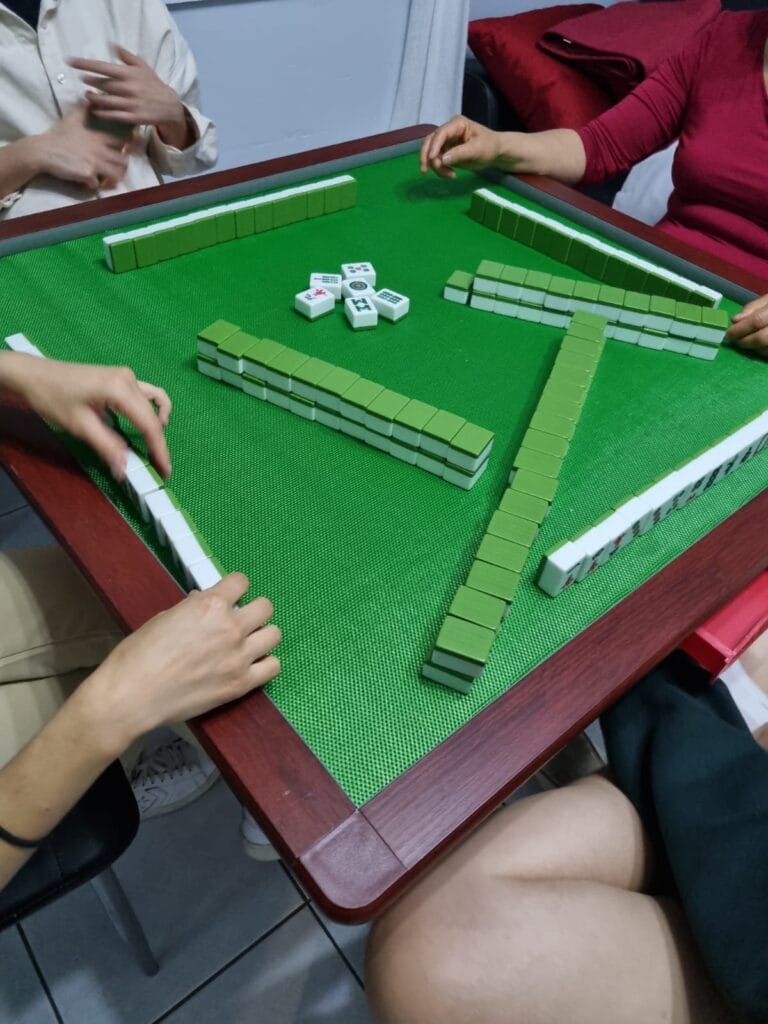
Players reaching for tiles around a green mahjong table during a game

Basic Mahjong Setup

  • Goal: Be the first to complete a legal winning hand
  • Players: 4
  • Tiles: 144 total
  • Starting Hand: 13 tiles per player (dealer starts with 14)

Mahjong Tiles Overview

Suits (Numbered Tiles)

  • Dots (Circles): 1–9
  • Bamboo (Sticks): 1–9
  • Characters (Wan): 1–9

Each numbered tile has 4 copies.

Honour Tiles

  • Winds: East, South, West, North
  • Dragons: Red, Green, White

Bonus Tiles (Optional)

  • Flowers and Seasons (used in some games for extra points)
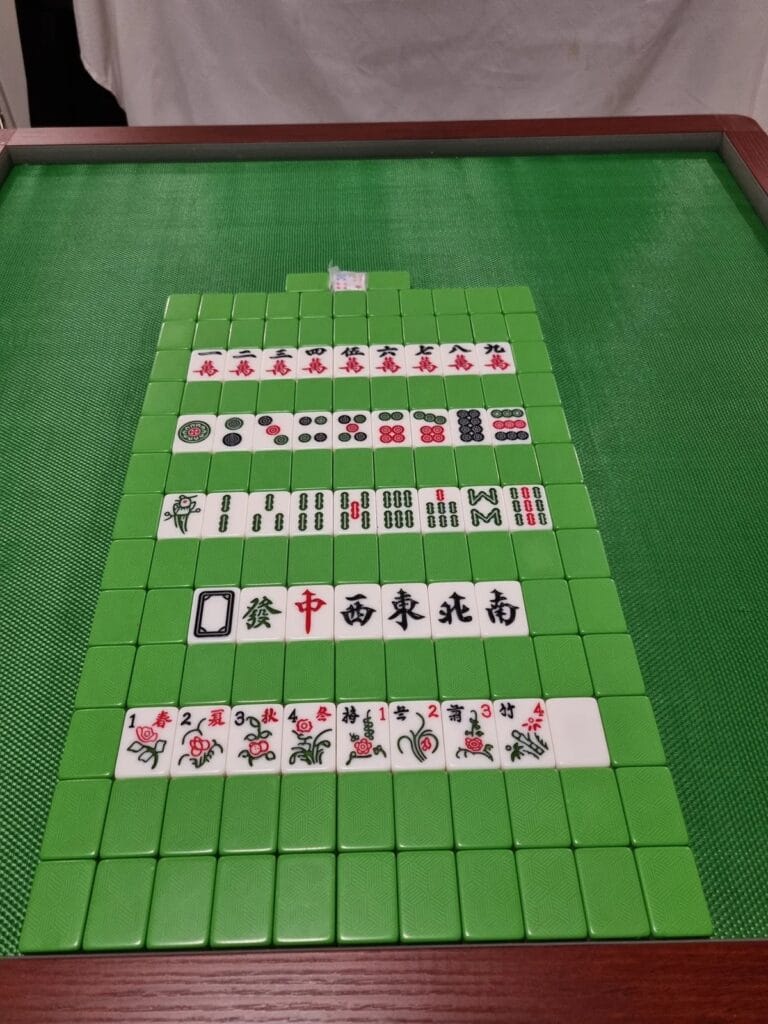
Complete mahjong tile set

Valid Mahjong Sets

A winning hand consists of 14 tiles made up of:

1. Chow (Sequence)

  • Three consecutive numbers in the same suit
  • Example: 4–5–6 Bamboo

2. Pung (Triplet)

  • Three identical tiles
  • Example: Red Dragon Γ—3

3. Kong (Quad)

  • Four identical tiles
  • Example: 7 Dots Γ—4

4. Pair (Eyes)

Example: East Wind Γ—2Mahjong or simplified Chinese Mahjong is often the easiest to introduce.

  • Two identical tiles
  • Example: East Wind Γ—2

How to Win

A standard winning hand contains:

  • 4 sets (Chows, Pungs, or Kongs)
  • 1 pair

Example:

  • White Dragon Γ—2
  • 2–3–4 Bamboo
  • 6–7–8 Characters
  • Red Dragon Γ—3
  • South Wind Γ—3

Gameplay Flow (Quick Version)

  1. Tiles are shuffled and stacked into walls
  2. Each player draws 13 tiles (dealer draws 14)
  3. Players take turns:
    • Draw a tile
    • Discard one tile
  4. Players may call:
    • Chow (only from player to your left)
    • Pung or Kong (from any player)
  5. First player to complete a legal hand wins

First player to complete a legal hand wins

Calling Tiles (Quick Rules)

  • Chow: Only allowed from the player to your left
  • Pung: Can be claimed from any discard
  • Kong: Can be declared from a discard or from your own hand
  • Mahjong (Win): Can be declared from a discard or self-draw (rules vary)

Common Mahjong Terms

  • Dealer: Player who starts the round
  • Wall: Stacked tiles used for drawing
  • Dead Wall: Reserved tiles for replacement after Kongs
  • Self-Draw: Winning by drawing your own tile
  • Discard: Tile thrown into the center

A Mahjong rules cheat sheet is one of the best tools for learning and enjoying the game with confidence. Whether you’re teaching friends, hosting a Mahjong night, or sharpening your own skills, having a printable guide nearby makes gameplay smoother and more enjoyable.

Let’s play mahjong πŸ€„!

How to Read Your Opponents in Mahjong

Mahjong isn’t just about the tiles in your handβ€”it’s also about the information on the table. Learning how to read your opponents can dramatically improve your defensive play and help you make smarter decisions throughout the game.

Watch the Discards

The discard pool tells a story:

  • Early discards often reveal unwanted suits
  • Repeated discards from the same suit suggest a different suit focus
  • Late-game discards can indicate safe tiles or desperation

Pay Attention to Calls

When an opponent:

  • Calls many tiles early β†’ aggressive or fast hand
  • Rarely calls β†’ likely building a concealed or high-value hand
  • Suddenly starts calling β†’ hand just became viable

Honor Tile Behavior

If an opponent keeps:

  • Winds or Dragons late β†’ they may be close to a value hand
  • Discards honors early β†’ safer to discard similar tiles later

Defensive Takeaway

Reading opponents won’t tell you their exact handβ€”but it helps you:

  • Avoid dangerous discards
  • Decide when to play defensively
  • Choose safer tiles under pressure

Mahjong rewards observation. The better you read the table, the fewer surprises you’ll face at the end of a hand.

Let’s play mahjong πŸ€„!

Mahjong CafΓ©s and Social Spaces: A Growing Trend

Across major cities worldwide, Mahjong cafΓ©s and social spaces are popping up – offering a modern twist on a classic game.

What Is a Mahjong CafΓ©?

A Mahjong cafΓ© typically offers:

  • Dedicated Mahjong tables
  • Casual food and drinks
  • Rental sets and beginner guidance
  • A relaxed, social atmosphere

Why They’re So Popular

Mahjong cafΓ©s combine:

  • Board game cafΓ© vibes
  • Cultural experience
  • Community-building spaces

They attract players who want something more engaging than scrolling on their phones.

A New Kind of Third Place

These cafΓ©s serve as:

  • Social hubs
  • Cultural bridges
  • Low-pressure environments for learning Mahjong

There are a few in the Sydney CDB, and I am sure there are a few in your local around (for those around the globe). Mahjong cafΓ©s are redefining how people experience the game – making it accessible, social, and trendyeginning.

However, if you wish to host someone at the comfort at your own home – you know where to go!

Let’s play mahjong πŸ€„!

How Mahjong Builds Friendships and Strengthens Communities

Mahjong is more than a gameβ€”it’s a social glue that brings people together across ages, cultures, and backgrounds.

Built-In Conversation and Connection

Mahjong naturally creates:

  • Shared jokes and moments
  • Friendly competition
  • Regular interaction

The game encourages talking, observing, and reacting together.

Intergenerational Bonding

Mahjong uniquely connects:

  • Grandparents and grandchildren
  • New immigrants and locals
  • Friends from different walks of life

Few games cross generations so seamlessly.

Community Mahjong Groups

Many communities host:

  • Weekly Mahjong nights
  • Cultural club gatherings
  • Charity Mahjong events

These gatherings build trust and long-term relationships.

Mahjong’s true value isn’t just winning – it’s the connections formed around the table.

Let’s play mahjong πŸ€„!

The Charleston

In Western Mahjong, the Charleston phase is an essential part of the game and presents an opportunity for strategic plays that can enhance your hand. During the Charleston, players pass tiles to their opponents, which can have a significant impact on the composition of their hands. Here are some examples of good Charleston plays in Mahjong:

  1. Discarding Useless Tiles: If you have tiles that are unlikely to contribute to your chosen winning hand or that are far from completing any potential hand, consider passing them during the Charleston. This minimizes the risk of having those tiles in your final hand.
  2. Exchanging Suits: If you notice that you have several tiles from one suit but need tiles from another suit to complete your desired hand, you can pass the tiles from the suit you don’t need and hope to receive tiles from the desired suit in return.
  3. Collecting Consecutive Tiles: If your winning hand requires consecutive tiles (chows), such as a run of numbers in one suit, you can use the Charleston to try and collect these tiles. Pass tiles that do not fit the sequence you’re aiming for and hope to receive tiles that complete your run.
  4. Strategic Passing: Pay attention to what your opponents are discarding during the Charleston. If you notice that an opponent is discarding a specific tile repeatedly, they may be trying to complete a particular hand. Consider passing tiles that complement their potential hand to disrupt their strategy.
  5. Joker Play: If joker tiles are in use, think strategically about when to pass them during the Charleston. You can pass a joker tile if it’s unlikely to be useful for your desired hand, but you might want to hold onto it if it could be crucial for completing your hand later.
  6. Concealing Your Hand: In some cases, it might be advantageous to pass tiles that don’t give away information about your hand. If your strategy relies on keeping your opponents guessing, you can use the Charleston to maintain that element of surprise.
  7. Communication with Your Partner: If you’re playing a team-based version of Mahjong, consider communicating with your partner during the Charleston to ensure that you pass tiles that are most beneficial to your team’s strategy.
  8. Balance Risk and Reward: Charleston plays involve an element of risk. You’re giving away tiles while hoping to receive useful ones in return. It’s important to strike a balance between passing tiles that don’t help you and not giving away tiles that could benefit your opponents.
  9. Adjust to Table Dynamics: Your Charleston strategy should also consider the current state of the game and the relative strengths and weaknesses of your opponents. If one player is far ahead in points, it might be wise to focus on defensive plays during the Charleston to prevent them from extending their lead.

Keep in mind that the effectiveness of your Charleston plays can vary depending on the specific Mahjong variant you’re playing and the house rules in place. Successful Charleston plays often require a good understanding of your own hand, a strategic approach to passing tiles, and an awareness of your opponents’ strategies.

Let’s play mahjong πŸ€„!

Mahjong Set Selection Guide: Finding Your Perfect Match

Choosing the right Mahjong set can greatly enhance your gaming experience. Whether you’re a seasoned player or just starting out, the world of Mahjong sets is rich and varied. In this blog post, we’ll provide a comprehensive Mahjong set selection guide, offering tips and advice for selecting the perfect set that aligns with your preferences and skill level.

Material Matters: Wood, Plastic, or Bakelite?

One of the primary considerations when selecting a Mahjong set is the material of the tiles and other components. Each material has its own unique characteristics:

1. Wood: Traditionalists often prefer wooden Mahjong sets for their authenticity and tactile feel. They can be beautifully crafted and add an elegant touch to the game. However, wooden sets are often heavier and more fragile.

2. Plastic: Plastic sets are lightweight, durable, and affordable. They are a practical choice for beginners or those who prefer a more casual play style. They are also less susceptible to damage from spills or mishandling.

3. Bakelite: Bakelite sets strike a balance between authenticity and durability. They are known for their smooth, satisfying feel and distinctive clacking sound. Bakelite is a popular choice among serious players.

Design and Style: Traditional or Modern?

Mahjong sets come in a range of designs, and your choice should reflect your personal taste and style:

1. Traditional: Traditional sets often feature intricate, hand-painted designs that harken back to the game’s Chinese origins. These sets may include symbols and characters with deep cultural significance.

2. Modern: Contemporary sets come in various styles, from minimalist to bold and vibrant. They may include non-traditional designs and patterns, catering to those who prefer a more modern aesthetic.

Size Matters: Full-Size or Travel-Friendly?

Mahjong sets come in different sizes, and your choice may depend on where and how you plan to play:

1. Full-Size: Full-size sets are the standard for home play and formal gatherings. They typically include larger tiles that are easy to handle and appreciate.

2. Travel-Friendly: If you intend to play Mahjong on the go, consider a travel-sized set. These compact sets are lightweight and portable, making them suitable for vacations or outdoor gatherings.

Chinese, Japanese, or Western Style: Know Your Rules

The type of Mahjong you plan to play also influences your choice of set:

1. Chinese Style: If you’re playing traditional Chinese Mahjong, look for sets with suit tiles (circles, bamboos, and characters), honor tiles (winds and dragons), and optional bonus tiles (flowers and seasons).

2. Japanese Style: Japanese Riichi Mahjong uses a specific set of tiles, which includes red five-bamboos and excludes some optional tiles found in Chinese sets. Ensure your set aligns with Japanese rules if that’s your preferred style.

3. Western Style: Western Mahjong, also known as American Mahjong, uses its own unique set of tiles, which includes joker tiles. Make sure your set is compatible with the rules you intend to play.

Budget Considerations

Mahjong sets can vary widely in price. Set a budget that suits your needs and preferences. While there are budget-friendly options, investing in a quality set can enhance your enjoyment and durability.

Selecting the right Mahjong set is a personal journey, influenced by your play style, preferences, and intended use. Whether you’re drawn to the traditional allure of wooden tiles or the modern convenience of a plastic set, there’s a Mahjong set out there that’s perfect for you. Remember that your Mahjong set is not just a tool for play; it’s a symbol of your love for this timeless game, and it should reflect your passion for it.

Let’s play mahjong πŸ€„!

The 5 Tips for Winning at Chinese Mahjong

hinese Mahjong, deeply rooted in history and strategy, is a game that demands a keen understanding of the tiles, opponents, and the ever-changing dynamics of play. Winning at Chinese Mahjong requires a combination of skill, foresight, and adaptability. In this blog post, we’ll delve into the top five tips to enhance your chances of success in the captivating world of Chinese Mahjong.

1. Strategize with a Balanced Hand:

A balanced hand is crucial for success in Chinese Mahjong. Aim for a mix of suits (characters, bamboos, and circles), honor tiles, and optional sets like winds and dragons. Avoid overly specialized hands early in the game, as they may limit your adaptability later on. A balanced hand provides flexibility and increases your chances of completing a winning combination.

2. Master Discard Reading:

Discard reading is an art in Chinese Mahjong. Pay close attention to the tiles discarded by your opponents. Analyze these discards to gauge their strategy, potential combinations, and the tiles they are likely to need. Discarding tiles strategically is equally important. Avoid giving your opponents the tiles they need, and don’t hesitate to adapt your strategy based on the tiles in play.

3. Utilize Concealed and Exposed Melds Wisely:

Understanding when to keep your hand concealed and when to expose melds is a critical aspect of Chinese Mahjong strategy. While concealed melds can be advantageous for surprise wins, exposing sets can help you gain points and control the pace of the game. Balance these decisions based on the current game situation, your hand’s potential, and the tiles available.

4. Be Mindful of the Prevailing Wind:

In Chinese Mahjong, the prevailing wind, determined by the dealer’s seat, can significantly impact the game. Adjust your strategy based on the prevailing wind to maximize scoring opportunities. Being aware of the wind direction and its influence on scoring can give you a strategic advantage over your opponents.

5. Strategic Use of Jokers:

Jokers, often represented by blank tiles, are wild cards that can be used to complete combinations. Use jokers strategically to fill gaps in your hand and increase your chances of declaring Mahjong. However, be mindful of the fact that other players can also use jokers, and adapt your strategy accordingly.

Chinese Mahjong is a game of skill, strategy, and adaptability. By strategizing with a balanced hand, mastering discard reading, wisely utilizing concealed and exposed melds, being mindful of the prevailing wind, and strategically using jokers, you can elevate your game and increase your chances of emerging victorious at the Chinese Mahjong table. Remember, each game is a unique challenge, and with practice and these strategic tips, you’ll be well on your way to mastering this ancient and captivating game.

Let’s play mahjong πŸ€„!

Taiwanese Mahjong Beginner vs Advanced Guide

Taiwanese Mahjong is unique for its 16-tile hands, bonus tiles, and higher-scoring structure. This guide compares beginner and advanced play styles with easy-to-understand examples.


Key Differences at a Glance

FeatureBeginner PlayAdvanced Play
Hand FocusSimple winsHigh-value hands
Tile CallsFrequentStrategic
Bonus TilesIgnoredMaximized
DefenseMinimalCritical

Beginner 16-Tile Example (Simple Win)

Hand Structure:

  • Chow: 2–3–4 Dots [2D][3D][4D]
  • Chow: 5–6–7 Dots [5D][6D][7D]
  • Pung: 8–8–8 Bamboo [8B][8B][8B]
  • Chow: 3–4–5 Characters [3C][4C][5C]
  • Pair: Red Dragon [RD]

Strategy:
Fast, flexible, and easy to complete.

Illustrated Tile Layout (Simple Win Text Example)

[2D][3D][4D]  [5D][6D][7D]  
[8B][8B][8B] [3C][4C][5C]  
[RD][RD] + Bonus Tiles

Advanced 16-Tile Example (High-Value Hand)

Hand Structure:

  • Pung: 1–1–1 Characters [1C]
  • Pung: 9–9–9 Characters [9C]
  • Pung: Red Dragon [RD]
  • Pung: Green Dragon [GD]
  • Pair: Seat Wind [EW]
  • Bonus: Flowers / Animals [Bonus Tiles]

Strategy:
Slower, riskier, but significantly higher scoring.


Illustrated Tile Layout (High-Value Hand Text Example)

[1C][1C][1C]  [9C][9C][9C]  
[RD][RD][RD] [GD][GD][GD]  
[EW][EW] + Bonus Tiles

Taiwanese Mahjong rewards patience, planning, and bonus tile awareness. Beginners should focus on completion; advanced players should focus on value.

Let’s play mahjong πŸ€„!

Mahjong and Gender: Exploring the Representation and Participation of Women in the Game

Mahjong, a game deeply rooted in Chinese culture, has transcended geographical boundaries to become a beloved pastime enjoyed by people of all ages and backgrounds. While Mahjong is often associated with male players in traditional settings, the representation and participation of women in the game have evolved over time. In this blog post, we’ll delve into the role of women in Mahjong, examining how their participation has shaped the game’s cultural significance and societal perception.

The Historical Context

Historically, Mahjong was predominantly played by men in China, particularly in social circles and gambling establishments. Women were often excluded from these male-dominated spaces, relegating them to the sidelines as observers or occasional participants. However, this traditional gender divide began to shift as Mahjong gained popularity beyond China’s borders.

The Rise of Women in Mahjong

In the early 20th century, as Mahjong spread to Western countries, it found a new audience among women. In countries like the United States, Mahjong became a popular social activity for women’s groups and gatherings, providing an opportunity for female players to engage in strategic gameplay and socialize with friends.

Mahjong in Modern Society

Today, the participation of women in Mahjong is widespread and diverse, reflecting changing societal attitudes and cultural norms. Women play Mahjong in various settings, including casual gatherings, competitive tournaments, and online platforms. Female Mahjong players have gained recognition for their skill and expertise, challenging stereotypes and breaking barriers in the male-dominated gaming world.

The Impact of Women in Mahjong

The increased representation of women in Mahjong has had a significant impact on the game’s culture and community. Women bring a unique perspective and playing style to Mahjong, enriching the game with their strategic insights and social interactions. Their presence has contributed to the diversification of Mahjong’s player base and the promotion of inclusivity within the gaming community.

Empowering Women Through Mahjong

Mahjong has become more than just a game for women; it’s a source of empowerment and camaraderie. Female Mahjong players find solidarity and support among their peers, fostering a sense of belonging and empowerment. Through Mahjong, women have found a platform to showcase their skills, build confidence, and challenge societal norms.

Conclusion

The representation and participation of women in Mahjong reflect the evolving dynamics of gender and gaming in society. As women continue to embrace Mahjong as a recreational and competitive pursuit, they play an integral role in shaping the game’s cultural significance and community. Mahjong serves as a symbol of empowerment, unity, and diversity, highlighting the transformative power of play in bridging gender divides and fostering inclusivity. As we celebrate the contributions of women to Mahjong, let us embrace the spirit of equality and collaboration that defines this timeless game.

Let’s play mahjong πŸ€„!

Advanced Tile Efficiency Tips to Improve Your Win Rate

Tile efficiency is the art of keeping your hand flexible and close to completion. Mastering efficiency is one of the fastest ways to increase your win rate.

Keep Multiple Waits

Hands with several possible winning tiles are stronger than narrow, single-tile waits.

Example:

  • 3–4–5 Bamboo is more flexible than 3–4 Bamboo alone

Avoid Over-Calling

Calling tiles too early reduces flexibility and reveals your hand to opponents.

Prioritize Shapes

Strong shapes include:

  • Two-sided waits (e.g., 4–5 waiting on 3 or 6)
  • Paired tiles with nearby numbers

Weak shapes include:

  • Single tiles
  • Edge waits (1–2 or 8–9)

Efficiency isn’t flashy – but it’s one of the most reliable paths to consistent improvement.

Let’s play mahjong πŸ€„!