

Most players are familiar with popular versions like Hong Kong, Riichi, or American Mahjong. But beyond these well-known styles lies a fascinating world of rare Mahjong variations—each shaped by local culture, history, and creativity.
These lesser-known versions offer fresh challenges and unique twists that can completely change how the game feels.
Vietnamese Mahjong
Vietnamese Mahjong features beautifully ornate tiles, often including special character tiles (flowers and jokers) and larger hand sizes. The game emphasizes visual artistry and complex scoring, making it both challenging and visually striking.
This version is especially popular among players who enjoy deeper calculation and decorative aesthetics.
There are also differences between the ‘classic’ and ‘modern’ Vietnamese Mahjong tile set.
Classic
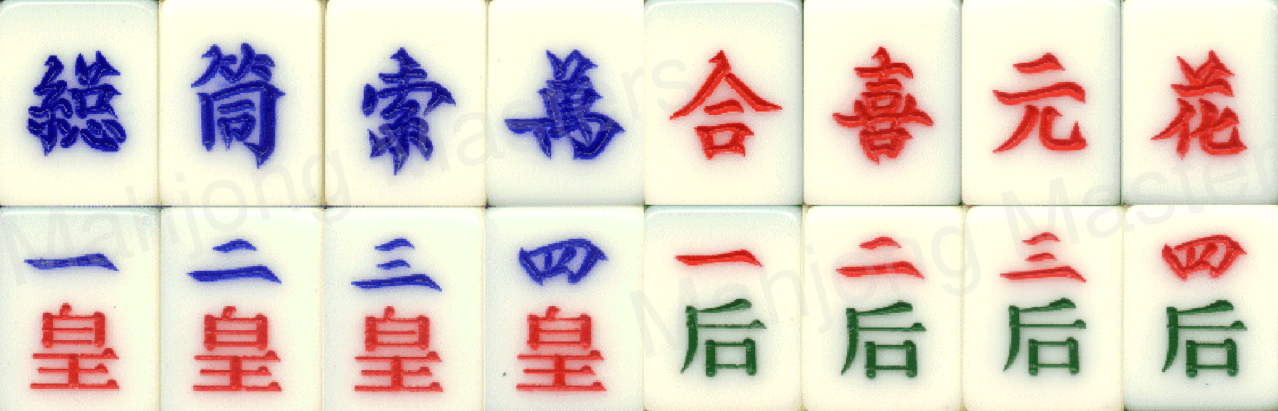
A classic 160-tile Vietnamese set uses the standard 144-tile set with 16 additional tiles. The 16 additional tiles comprise of 8 Vietnamese jokers are at shown on the top row, and the 4 kings and 4 queens at lower row.
Modern
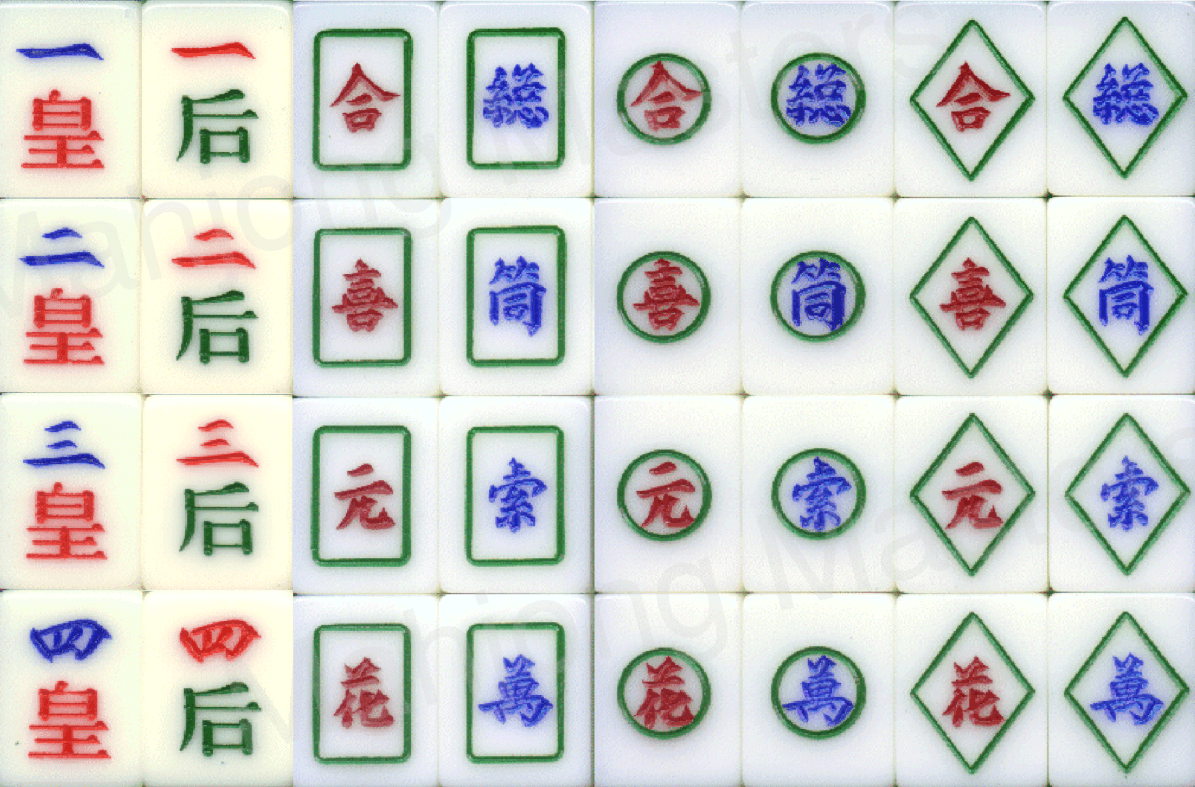
A modern 176-tile Vietnamese set has 24 jokers (the 8 jokers of the Vietnamese classic set, triplicated. Each joker set is outlined by circular, rectangular, or diamond shapes), along with the 4 kings and 4 queens.
Extra Tiles
Some players use a 177th tile, which is a combined ‘Wind and Dragon’ joker. For the ease of manufacturer’s to make an even set, it often comes with a 178th tile which is a extra ‘Big Flower’.
Sichuan Bloody Mahjong
Sichuan Bloody Mahjong is fast, aggressive, and chaotic – in the best way possible. Unlike most versions, players continue playing even after someone wins. Multiple players can win in the same round, leading to dramatic, high-energy endings.
This variation rewards bold play and quick decision-making.
For more information see a cheatsheet created by ‘danma‘.
Malaysian Three-Player Mahjong
Designed for three players instead of four, this version uses fewer tiles and faster rounds. With less information available, efficiency and adaptability become critical.
It’s perfect for smaller groups and players who enjoy rapid gameplay.
Generally, a Malaysian Mahjong tile set contains 88 tiles, but only 84 are needed.
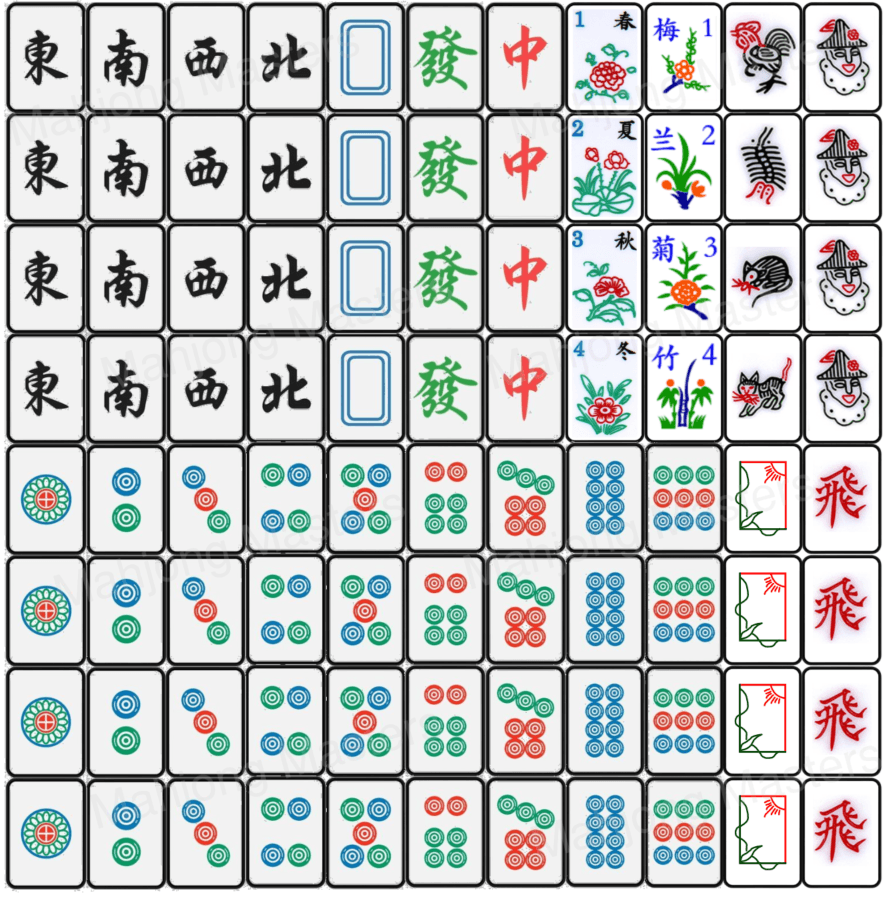
Malaysian Mahjong uses the same ‘flower’ and ‘season’ tiles, with addition of the red ‘fly’ tile, the ‘face’ tile, and the ‘animal tiles’.
The Fly Tiles are used like Jokers. The Face Tiles and Animal tiles are used like Flowers. The green and red Rectangular Tile can be used as White Dragons.
Shanghainese Mahjong
Shanghainese Mahjong strips the game down to its essentials. With fewer tiles, simpler rules, and rapid rounds, it’s often recommended as a beginner-friendly version.
Despite its simplicity, it still rewards sharp observation and smart tile management.
Shanghainese Mahjong uses the standard 144-tile standard Mahjong set (Cracks, Bamboos, Dots, Dragons, Winds, and Flowers).
Filipino Mahjong
Filipino Mahjong blends traditional Mahjong mechanics with card-game elements and strong betting dynamics. It’s highly social and competitive, often played in lively group settings.
This variation highlights Mahjong’s adaptability and cultural evolution.
Filipino Mahjong uses the standard 144-tile standard Mahjong set (Cracks, Bamboos, Dots, Dragons, Winds, and Flowers).
Why Explore Rare Variants?
Trying different Mahjong styles:
- Keeps gameplay fresh
- Sharpens adaptability
- Expands strategic thinking
- Deepens appreciation for the game’s history
Exploring rare variants reminds players that Mahjong isn’t a single game. It’s a global family of games connected by shared roots and endless creativity.
Are you aware of other mahjong variations that we haven’t spoken about yet? Please comment about them below!
Let’s play mahjong 🀄!
Wanting Mahjong Merchandise? We offer unique and personalised offerings.
Curious enough to try one? Rent a mahjong set and play a variant properly before you commit to buying.
More in Mahjong Variations