

Singapore Mahjong is a distinctive and exciting Mahjong variant known for its unique tiles, fast-paced gameplay, and simplified yet strategic scoring system. Popular in Singapore and parts of Southeast Asia, this version blends traditional Chinese Mahjong with local twists that make it accessible for beginners while still rewarding skill and experience.
In this post, we’ll explore what sets Singapore Mahjong apart, including its special tiles, rules, and scoring system.
Download our FREE Singapore Mahjong Scoring Cheat Sheet (Beginner Friendly): Singapore Mahjong Scoring (Basic Guide).
What Is Singapore Mahjong?
Singapore Mahjong is typically played by four players and is best known for the inclusion of Animal tiles and a relatively straightforward fan-based scoring system. Compared to Hong Kong or Taiwanese Mahjong, Singapore Mahjong focuses on quick wins, visible scoring elements, and lively gameplay.
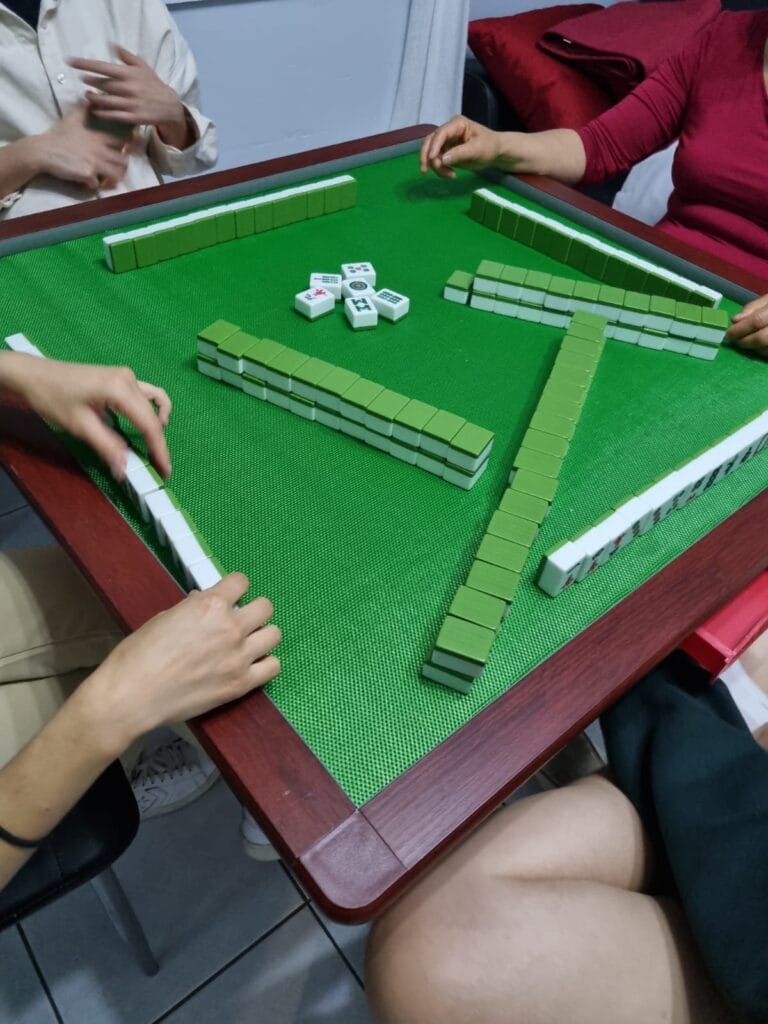
Tiles Used in Singapore Mahjong
Singapore Mahjong uses the standard 144-tile Mahjong set, plus special tiles that are essential to the game.
Suited Tiles
- Dots (Circles): 1–9
- Bamboo (Sticks): 1–9
- Characters (Wan): 1–9
Each numbered tile appears four times.
Honour Tiles
- Winds: East, South, West, North
- Dragons: Red, Green, White
Bonus Tiles (Optional)
- Flower Tiles
- Animal Tiles (Cat, Mouse, Rooster, Centipede)
Animal tiles are unique to Singapore Mahjong and play a key role in scoring.
Key Rules That Make Singapore Mahjong Different
Animal Tiles
- Animal tiles can be used immediately for points and often trigger special payouts. Some animal combinations allow players to collect payments instantly, even before the hand ends.
Simple Winning Structure
A winning hand consists of:
- 4 sets (Chows, Pungs, or Kongs)
- 1 pair
- Total of 14 tiles
This is similar to Hong Kong Mahjong but with different scoring priorities.
Minimum Fan Requirement
Most Singapore Mahjong games require a minimum of 1 fan to declare Mahjong, making it beginner-friendly and fast-moving.
Key Rules That Make Singapore Mahjong Different
Singapore Mahjong uses a fan (point) system, but scoring is generally easier to learn compared to other Mahjong variants.
Common Scoring Elements
- Self-draw win
- Pung of Dragons
- Pung of Seat Wind or Round Wind
- All Chows
- All Pungs
- Half Flush (one suit + honors)
- Full Flush (one suit only)
- Flower tiles
- Animal tiles
Animal and flower tiles are especially important, as each typically scores 1 fan and may come with additional payouts depending on house rules.
Payment Rules (Typical)
- All players pay the winner
- Self-draw wins usually receive higher payouts
- Animal tile bonuses may require immediate payment from all players
- House rules determine final payout structure
Strategy Tips for Singapore Mahjong
1. Prioritize Bonus Tiles
Animal and flower tiles add quick points and should never be ignored.
2. Play Fast and Flexible
Singapore Mahjong rewards quick decision-making and efficient hands.
3. Watch for Animal Tile Combos
Some animal combinations offer instant rewards—know them well.
4. Don’t Overbuild
Since the minimum fan requirement is low, chasing overly complex hands can slow you down unnecessarily.
Why Players Love Singapore Mahjong
- Easy to learn and teach
- Fast-paced and social
- Unique Animal tile mechanics
- Great balance of luck and skill
- Perfect for casual and home games
Singapore Mahjong stands out for its unique Animal tiles, simple scoring, and energetic gameplay. It’s an excellent choice for players who want a Mahjong experience that’s social, exciting, and easy to pick up without sacrificing strategic depth.
If you’re looking to try a Mahjong variant that feels fresh and fun, Singapore Mahjong is well worth learning.
Let’s play mahjong 🀄!
Wanting Mahjong Merchandise? We offer unique and personalised offerings.
Curious enough to try one? Rent a mahjong set and play a variant properly before you commit to buying.
More in Mahjong Variations, Strategy