

Mahjong (麻將, pronounced mah-jong), is the ancient Chinese game of strategy, skill, and chance, has captured the hearts of millions worldwide. Its history is as rich and intricate as the game itself. In this blog post, we embark on a journey through time to explore the captivating history of Mahjong, from its enigmatic origins in China to its global popularity today.
The Birth of Mahjong: Early Origins
The exact origins of Mahjong remain shrouded in mystery. Some historians suggest that it emerged in ancient China during the time of Confucius, over 2,500 years ago. Legend has it that the game was created by a Chinese philosopher to teach his students about life’s principles.
The game was originally called 麻雀 (pronounced mah-chue), meaning sparrow. The name sparrow may be due to the clacking sounds of tiles during shuffling resembles the chattering of sparrows. This name is still used in several southern Chinese languages such as Hokkien and Cantonese.
There is a possibility that some say early versions of Mahjong used cards rather than the familiar tiles. These cards, known as “madiao,” featured different combinations, similar to modern Mahjong hands. However, the transition from cards to tiles occurred later in the game’s evolution.
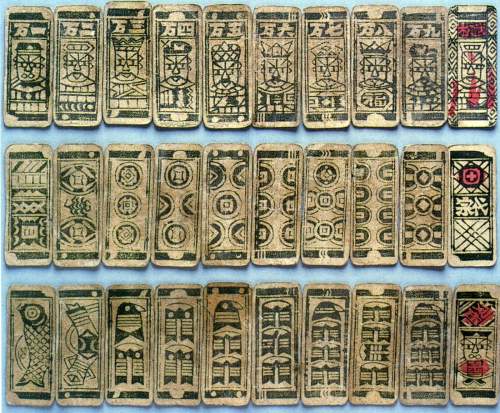
Image courtesy of https://sloperama.com/mjfaq/mjfaq11b.html: One of several decks of money-suited cards in the collection of the Mahjong Museum in Chiba, Japan. The museum’s 1999 “Big Encyclopedia” refers to these cards (perhaps erroneously) as “Matiao playing cards,” and notes that this type of card is “currently used mainly in Beijing.” P. 45.
Mahjong’s Transformation: Late 19th Century to Early 20th Century
The game’s transformation into the Mahjong we know today began in the late 19th century. This period saw the shift from card-based versions to the distinctive ivory or bamboo tiles we associate with the game.
One of the pivotal moments in Mahjong’s history occurred during the early 20th century. Joseph Park Babcock, an American businessman, played a vital role in introducing Mahjong to the Western world. After learning the game in China, he published a simplified rulebook in English, making it accessible to a broader audience.
Mahjong in the Roaring Twenties
The 1920s saw a Mahjong craze sweep across the United States. The game became a social phenomenon, captivating people from all walks of life. It was often referred to as the “game of a thousand wonders” due to its complexity and the intricacy of the tiles.
Mahjong clubs and parlors sprung up across the country, and women’s magazines featured articles on the latest Mahjong strategies and etiquette. It became a symbol of the era’s cultural dynamism and the newfound liberation of women.
Mahjong in Pop Culture
Mahjong’s popularity extended beyond the game itself. It made appearances in various forms of media, including films, books, and art. The game even played a role in political cartoons, reflecting the geopolitical climate of the time.
In popular culture, Mahjong became synonymous with sophistication and social interaction. It appeared in iconic movies like “The Joy Luck Club” and “Crazy Rich Asians,” helping to cement its status as a timeless classic.
Modern Mahjong: A Global Phenomenon
Today, Mahjong transcends cultural and geographical boundaries. It has adapted to the digital age, with online versions and mobile apps allowing players from around the world to enjoy the game together.
Competitive Mahjong has also gained prominence, with international tournaments drawing top players from various countries. The World Mahjong Championship, for example, showcases the game’s global appeal.
Mahjong’s history is a testament to its enduring allure. From its enigmatic origins in ancient China to its widespread popularity in the modern world, Mahjong has stood the test of time. It is not merely a game but a cultural phenomenon that continues to bridge cultures and generations. As we shuffle the tiles and draw the first hand, we become part of this fascinating history, carrying forward a tradition that has spanned centuries.
Let’s play mahjong 🀄!
Wanting Mahjong Merchandise? We offer unique and personalised offerings.

Looking for a set of your own? See our mahjong merchandise, or rent a full setup to try one first.
More in Information, Lifestyle & Social