

Hong Kong Mahjong is one of the most popular and widely played Mahjong variants in the world. Known for its fast pace, straightforward rules, and emphasis on skill and strategy, it’s often the version people mean when they say “Chinese Mahjong.” Whether you’re new to the game or looking to refine your approach, this guide breaks down the rules, scoring system, and key strategies of Hong Kong Mahjong in a clear and easy-to-follow format.
Download our FREE Hong Kong Mahjong Scoring Cheat Sheet (Beginner Friendly): Hong Kong Mahjong Scoring (Basic Guide).
What Is Hong Kong Mahjong?
Hong Kong Mahjong is a traditional four-player game focused on forming a winning hand made up of four sets and one pair. Compared to other versions like Riichi or American Mahjong, Hong Kong Mahjong uses simpler scoring, fewer restrictions, and allows for flexible play styles.
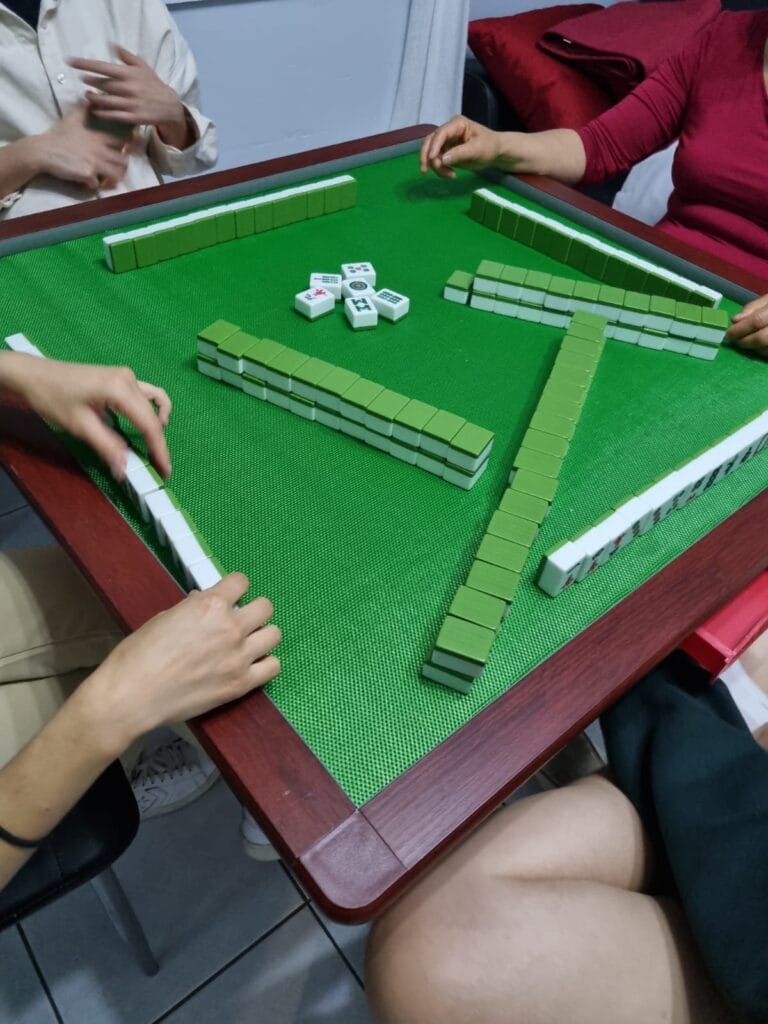
Tiles Used in Hong Kong Mahjong
A standard Hong Kong Mahjong set includes 144 tiles.
Suited Tiles
- Dots (Circles): 1–9
- Bamboo (Sticks): 1–9
- Characters (Wan): 1–9
Each numbered tile appears four times.
Honour Tiles
- Winds: East, South, West, North
- Dragons: Red, Green, White
Bonus Tiles (Optional)
- Flowers and Seasons (often used for bonus points or house rules)
Basic Rules of Hong Kong Mahjong
Number of Players
- 4 players
Objective
- Be the first to complete a legal winning hand of 14 tiles
Starting the Game
- Each player starts with 13 tiles
- The dealer (East) starts with 14 tiles and discards first
Turn Structure
- Draw one tile from the wall
- Discard one tile
- Other players may claim the discarded tile for:
- Chow (left player only)
- Pung or Kong (any player)
- Declare Mahjong when a winning hand is completed
Valid Sets in Hong Kong Mahjong
Chow (Sequence)
- Three consecutive numbers in the same suit
- Example: 3–4–5 Bamboo
Pung (Triplet)
- Three identical tiles
- Example: Red Dragon ×3
Kong (Quad)
- Four identical tiles
- Example: 7 Dots ×4
- Requires a replacement tile from the dead wall
Pair (Eyes)
- Two identical tiles
- Example: East Wind ×2
Winning Hands
A standard winning hand consists of:
- 4 sets (any combination of Chows, Pungs, or Kongs)
- 1 pair
Some tables require a minimum point value (often 3 or 4 points) to declare Mahjong.
Hong Kong Mahjong Scoring (Basic Guide)
Hong Kong Mahjong uses a fan (point) system, where different patterns and actions add points to your hand.
| Scoring Element | Fan |
|---|---|
| All Chows | 1 |
| Pung of Dragons | 1 |
| Pung of Seat Wind | 1 |
| Pung of Round Wind | 1 |
| All Pungs | 3 |
| Mixed One Suit | 3 |
| Pure One Suit | 6 |
| Self-Draw Win | 1 |
| Flower Tile (each) | 1 |
Note: Scoring values may vary by house rules. Always confirm before playing.
Payment Rules (Typical)
- The winner is paid by all players
- Self-draw wins usually earn higher payouts
- If a player wins on a discard, the discarder often pays more
Basic Strategy Tips for Hong Kong Mahjong
1. Build Flexible Hands Early
Avoid committing to a single suit too early. Keep multiple options open until the wall reveals more information.
2. Watch Opponents’ Discards
Tracking discarded tiles helps you predict opponents’ hands and avoid dangerous discards late in the game.
3. Balance Speed and Points
Fast hands are tempting, but waiting for higher-value fan combinations can be worth the risk.
4. Know When to Play Defense
If another player looks close to winning, focus on safe discards rather than pushing for points.
5. Use Kongs Wisely
Kongs can increase your score but also reveal information to opponents. Timing is critical.
Why Hong Kong Mahjong Is So Popular
- Easy to learn, difficult to master
- Fast-paced and exciting gameplay
- Strong balance between luck and strategy
- Ideal for casual games and competitive play
Hong Kong Mahjong offers a perfect blend of accessibility and strategic depth. With straightforward rules, flexible scoring, and endless variation, it’s an excellent choice for both beginners and experienced players. Understanding the rules and scoring system is the first step toward improving your game and enjoying every round.
🀄 Ready to build your winning hand?
Let’s play mahjong 🀄!
Wanting Mahjong Merchandise? We offer unique and personalised offerings.
Curious enough to try one? Rent a mahjong set and play a variant properly before you commit to buying.
More in Mahjong Variations, Strategy